




Exosomes, Microneedling, and Peptides: Understanding the Skin Technologies Gaining Attention
Exosomes, microneedling, and biological peptides are increasingly appearing in conversations around skin rejuvenation. Yet behind the appealing terminology, the level of scientific evidence supporting each technology can vary considerably.
What Are Exosomes?
Exosomes are nanosized extracellular vesicles released by cells. They carry proteins, lipids, and other biological signals that enable cells to communicate with one another.
One important distinction: exosomes are not stem cells. While exosomes can be derived from stem cells or other cell types, they are the extracellular vesicles released by those cells, not the cells themselves.
This distinction matters because the term “stem cell-derived exosomes” can sometimes create the impression that a treatment contains stem cells. In reality, the composition, source, manufacturing process, purity, and biological activity of an exosome-based product all need to be considered separately.
Do Exosomes Really Rejuvenate the Skin?
Research into exosomes for skin rejuvenation is promising, but it is still developing.
A 2026 systematic review of 19 human studies reported potential improvements in outcomes such as skin hydration, elasticity, wrinkles, pores, pigmentation, and overall appearance. However, many of the available studies were not randomized controlled trials, and the studies differed substantially in their products, treatment protocols, outcome measures, and follow-up periods. The authors therefore emphasized the need for more rigorous clinical research before firm conclusions can be drawn.
Research specifically examining the combination of exosomes and microneedling has shown similarly encouraging results, but the evidence remains limited. A 2026 systematic review identified only eight studies for its final synthesis, with relatively small sample sizes and considerable variation in treatment approaches.
In other words, exosome-based skin treatments are an area of active research — but “promising” should not automatically be interpreted as “clinically proven.”
What Does “FDA-Approved Exosome” Actually Mean?
This is another point that deserves particular attention.
According to the U.S. Food and Drug Administration (FDA), there are currently no FDA-approved exosome products. The FDA has also warned about unapproved exosome products marketed for medical uses and the potential risks associated with products that have not undergone the required regulatory review.
Therefore, claims such as “California-origin,” “laboratory-grade,” or a specific quantity such as “10 billion exosomes” should not be confused with FDA approval.
A numerical count alone does not establish a product’s purity, identity, potency, safety, or clinical effectiveness. These are separate aspects that require appropriate testing and evidence.
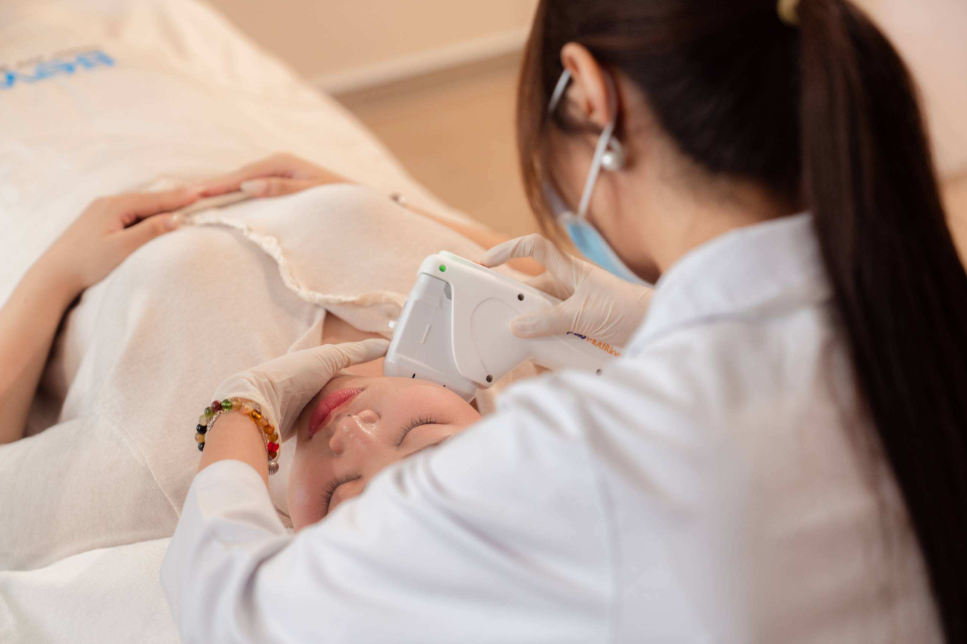
Microneedling: A More Established Clinical Technique
Unlike exosome-based treatments, microneedling has been studied and used in dermatology for considerably longer.
The technique uses fine needles to create controlled micro-injuries in the skin. This activates the skin’s natural wound-healing response and can stimulate tissue remodeling, while also potentially facilitating the delivery of topical active ingredients.
Clinical research has investigated microneedling for concerns including wrinkles, uneven skin texture, photoaging, acne scars, and skin laxity. A 2025 systematic review covering 21 studies and 723 patients found generally positive outcomes, although the authors also noted limitations in study quality and the lack of standardized treatment and outcome measures.
Microneedling is therefore not simply a cosmetic trend. However, its effectiveness still depends on factors such as treatment protocol, device parameters, skin condition, number of sessions, and clinical expertise.
What Are Biological Peptides?
Peptides are short chains of amino acids that can act as biological signaling molecules. In skincare, different peptide groups are formulated for different purposes, including supporting skin structure, hydration, and collagen-related processes.
Evidence for topical peptides is growing, but it is not uniform across all peptide formulations.
A 2026 systematic review and meta-analysis of 19 randomized controlled trials involving 1,341 participants found that peptide-based interventions could improve skin hydration and brightness, with more modest effects on wrinkles. Findings related to elasticity and skin density were less consistent.
This highlights an important point: “peptide” is a broad category, not a single treatment. The type of peptide, formulation, concentration, delivery system, and clinical context all influence its potential effect.
The Bottom Line: New Technology Still Needs Evidence
Exosomes, microneedling, and peptides represent different approaches to skin rejuvenation, and their evidence bases are not interchangeable.
| Technology | What it is | Current evidence |
|---|---|---|
| Exosomes | Extracellular vesicles carrying biological signals | Promising early clinical evidence, but still limited and heterogeneous |
| Microneedling | Controlled mechanical micro-injury to stimulate skin remodeling | More established clinical evidence, though protocols vary |
| Peptides | Short chains of amino acids used in different skincare formulations | Growing evidence, with results varying by peptide and formulation |
For women considering advanced skin treatments, the key question is therefore not simply “Which technology is newest?”, but “What does the evidence support for my specific skin condition and treatment goal?”
At BeWell, advanced technologies are considered as part of a broader dermatological approach — with treatment decisions guided by individual skin assessment, medical expertise, and the quality of the evidence behind each intervention.
Hotline: 1800 0054
Email: [email protected]
BeWell – Hệ thống chăm sóc sức khỏe toàn diện với mô hình “WellNest” tiên phong!
Bài viết nổi bật
Topic
Related topics